

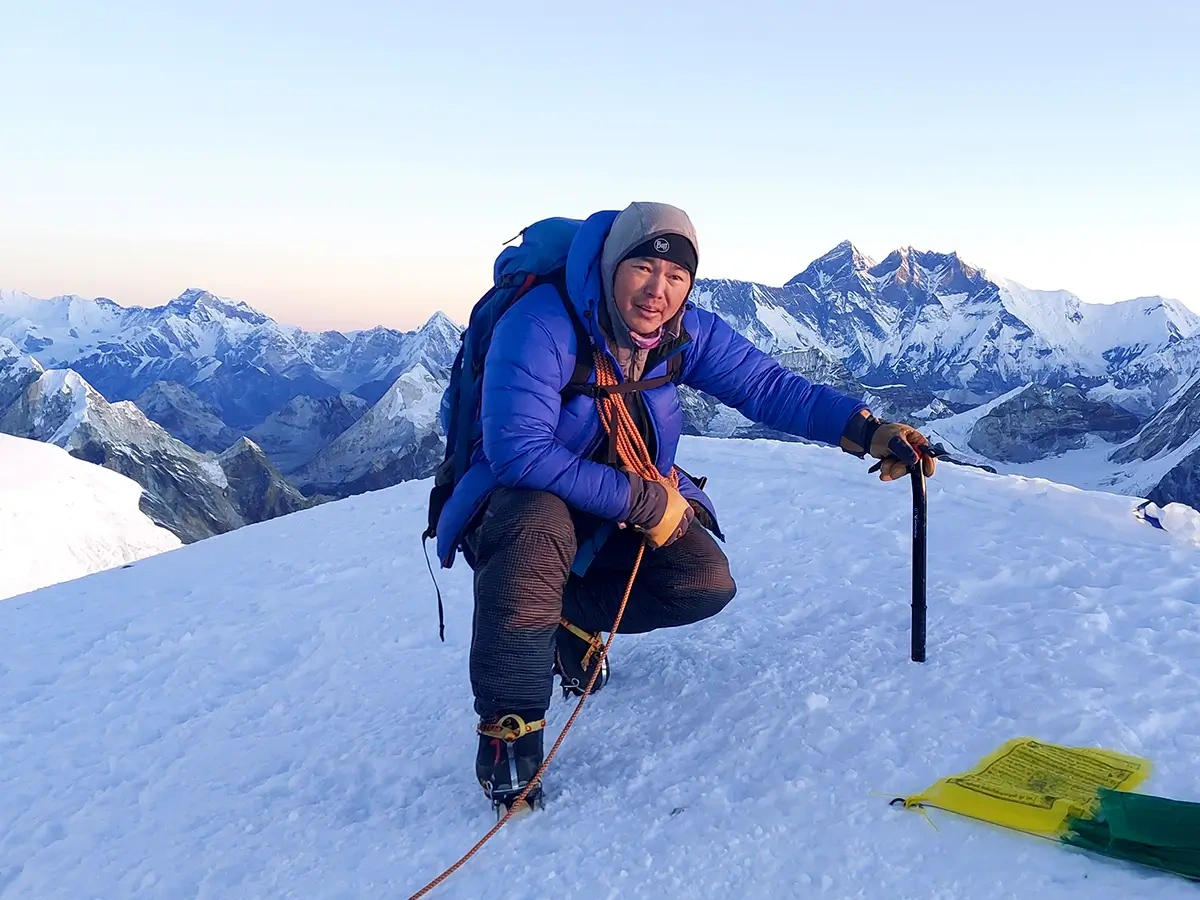
The Mera Peak Climbing is one of the most rewarding Himalayan expeditions in the region of the world’s highest mountain peak, Sagarmatha/Everest (8,848.86 m). Mera Peak, at an elevation of 6,476 m above sea level, is Nepal’s highest trekking peak and is for trekkers and climbers eager to truly test their climbing skills and knowledge. The Mera Peak expedition provides just the perfect practice ground.
Although the Mera Peak Climbing Itinerary of 16 days begins like any other typical Himalayan trip in the Everest Trekking and Climbing region, such as the Everest Base Camp Trek, Everest Circuit Trek, Everest Three High Passes Trek, Island Peak Climbing, and Lobuche East Peak Climbing from Namche Bazaar, you will follow the less trodden route to reach atop Mera Peak Summit.
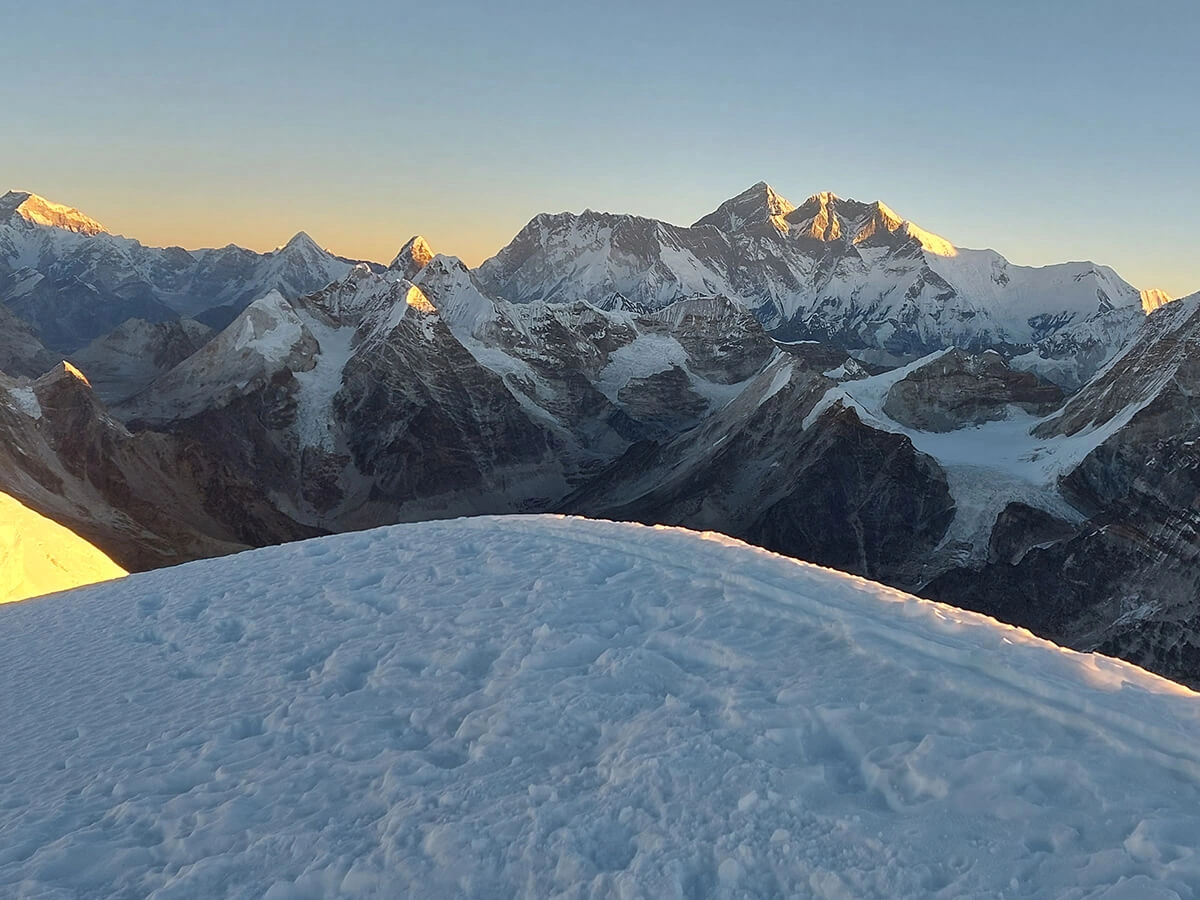
Famous for stunning mountain views of at least five of the peaks 8,000 m above sea level, Lhotse, Cho Oyu, Makalu, and Kanchenjunga, including the top of the world, Mount Everest, while the Mera Peak Summit Day can be challenging, the overall experience comes with a deep sense of adventure, achievement, and unforgettable memories, worth everything. Gear up, prepare in advance, and make the best of the Himalayan expedition in Nepal.
Join us to conquer this 6,000 m Himalayan Nepal Mountaineering Association (NMA) peak in the Everest trekking and climbing region. With a team of experienced mountaineers as your guide, trained and licensed by the government of Nepal itself, with I Trek Himalayan, you are in trusted and reliable hands. Book early and get special discounts on the Mera Peak climbing cost, including for the years 2026 and 2027. Reserve your spot now!
What to expect during the Mera Peak Expedition in Nepal?
The Nepal Mountaineering Association (NMA) recognized the tallest trekking peak in Nepal, 6,000 m, Mera Peak, as a beginner-friendly Himalayan expedition. However, it is a must that you have a good level of physical fitness. To successfully make it through the phases with steep ascents and descents, climbing through rugged and icy trails, and also the low oxygen level prone to altitude sickness or acute mountain sickness (AMS).
One should never underestimate the inherent risk that comes with high-altitude trekking and climbing, be it to Island Peak Climbing, Lobuche East Peak, Everest Base Camp Trek (EBC), Annapurna Base Camp (ABC) Trek, or the Mera Peak Climbing itself. Overall, the quality health services and modern amenities are things of luxury nonexistent in and around EBC and Mera Peak, requiring a good level of preparation.
Life of Sherpa - A window to the daily lives of the Tigers of Snow
Before you officially begin the Mera Peak Climbing journey from Khare (Mera Peak Base Camp) via High Camp, climbers first trek for several days, which includes walking past villages and staying at teahouses dotted along the Mera Peak trekking route. These villages are largely populated by Sherpas, one of the indigenous communities of Nepal, native to the Himalayas, who have made their name for extraordinary mountaineering skills.
Earning them the nickname "the Tigers of Snow," while you stay in teahouses, lodges, and guest houses opened by locals during the journey for the Mera Peak Expedition, you also have a golden opportunity to observe the typical mountain life led by Sherpas closely. If your time of visit coincides with local festivals like Dumje, Mani Ridum, Lhosar, and Buddha Jyanti, you may even get to be part of these vibrant celebrations of harmony and beliefs.
View of 5 of the 8,000 m mountain peaks in a single trip
It is what makes the Mera Peak stand out among other trekking peaks in the Everest Himalayas and their climbing routes, such as Lobuche East Peak Climbing and Island Peak Climbing. The open views of at least five of the tops of the world: Kanchenjunga (8,586 m/the third-highest mountain in the world), Lhotse (8,516 m/the 4th highest), Makalu (8,485 m/the 5th tallest), Cho Oyu (8,201 m/the 6th tallest), and the top of the world, Mount Everest.
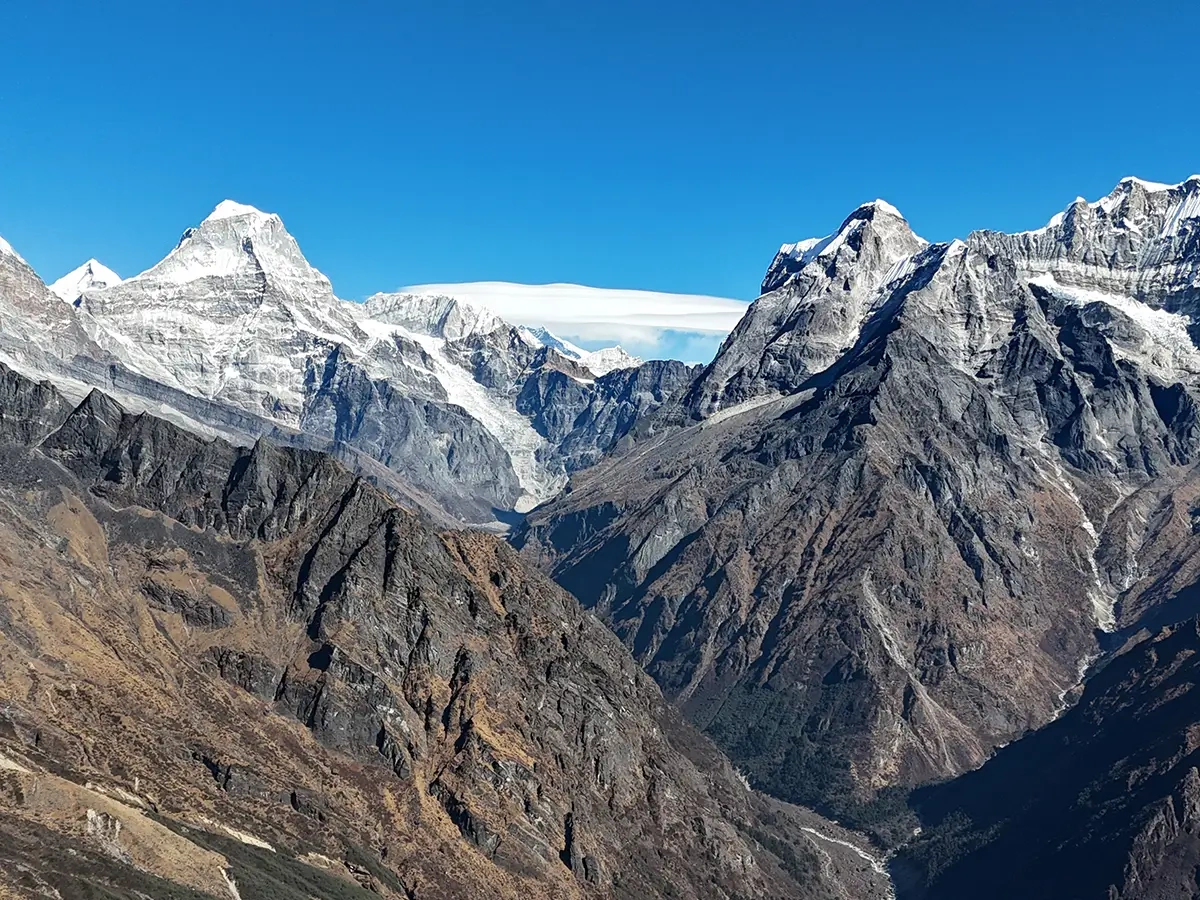
From stealing glimpses as you walk past the dense forests of the Sagarmatha National Park, one of the natural UNESCO World Heritage Sites from Nepal in the lower region, to reaching the rugged and snowy summit point of the Mera Peak with a 360-degree panoramic mountain sight, exceptionally stunning during sunrise and sunset. A diverse landscape with a sky horizon dominated by snow-blanketed mountain ranges makes it a rewarding journey.
Side trip to the Everest Base Camp and Kala Patthar
While you are in the realm of the world’s highest mountain, Mount Everest, locally called Sagarmatha and Chomolungma, many may not want to miss out on the hike to at least its base camp, the closest you could be without summiting the peak itself, and then the high-altitude peak, Kala Patthar, with the closest view of Mount Everest. Although the standard Mera Peak Climb Itinerary does not include it, you may add extra trek days.
We are happy to customize the trip as per your preferences and area of interest. Communicate with your guide; inform them in the middle of the journey, or be best informed during booking, even before the Himalayan expedition's official departure. It may incur additional costs on the pre-decided Mera Peak Expedition cost, including for the years 2026 and 2027; you will not be disappointed with what it has to offer you.
Mera Peak Summit Day and the Importance of Buffer Days
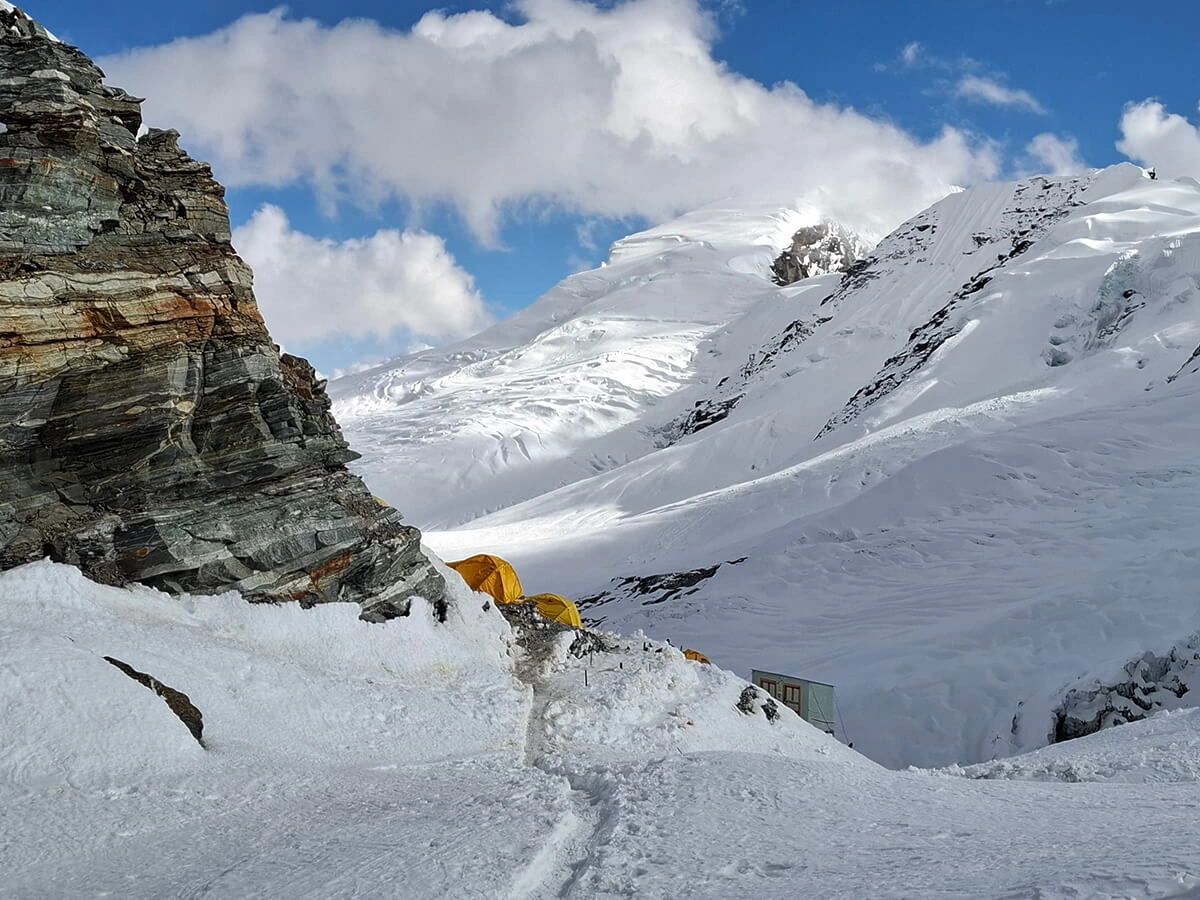
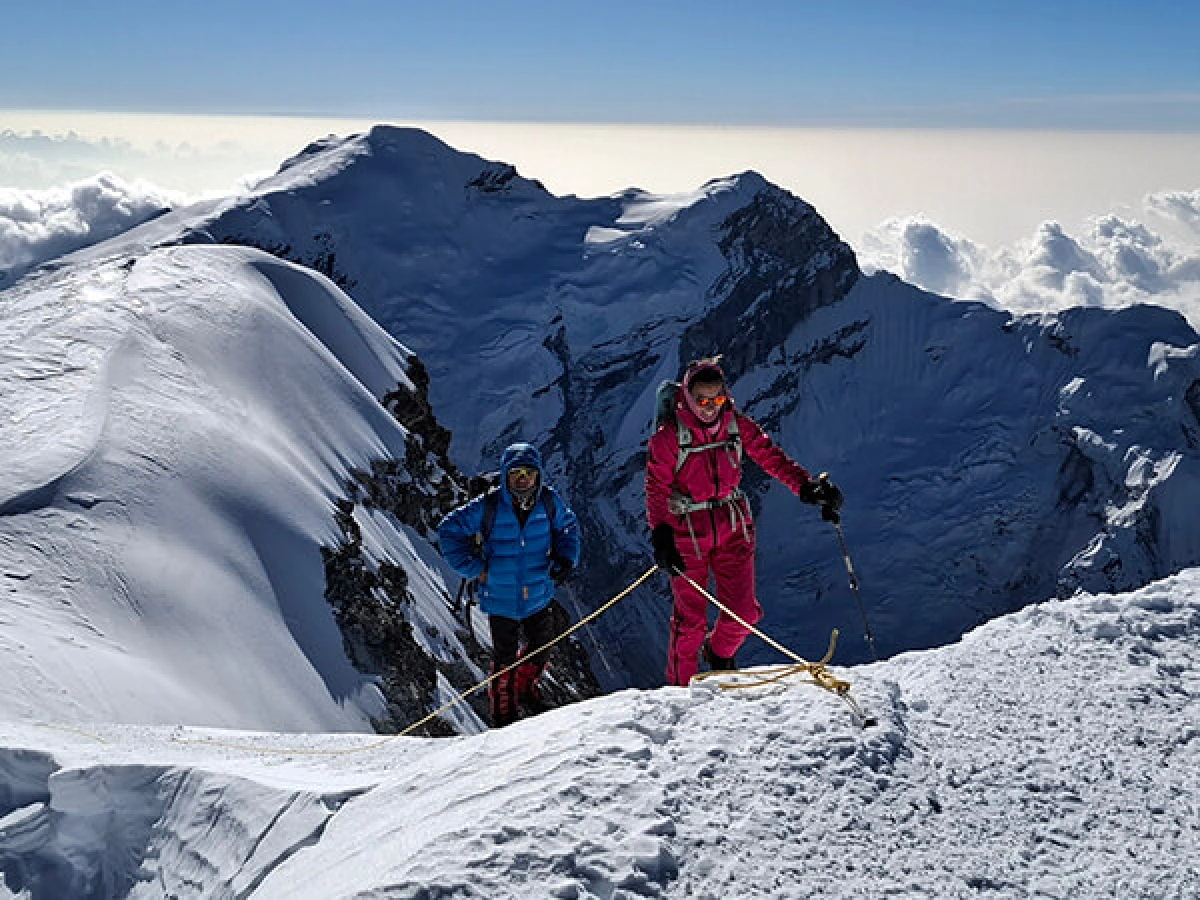
Unlike other trek days, following the typical Mera Peak Expedition itinerary of 16 days, the actual Mera Peak climbing day is the 10th day and begins even before dawn, so you can complete the summit and return to Khare in the morning without having to deal with the windy weather of the afternoon. This day is both the most challenging and rewarding part of the journey, which also includes steep uphill climbs and, later on, descents.
Proper acclimatization is one of the keys to the Mera Peak Expedition's success rate. The standard route takes you through Lukla, Chutanga, Chatrabuk, Kothe, Thangnak, Khare, and finally to High Camp. It includes two days of acclimatization and one contingency day for a hassle-free experience without rush, in consideration of changeable Himalayan weather, and hence is taken as the best Mera Peak itinerary. You may add extra stays and trips.