

The Inner Dolpo Trek is one of the best off-the-beaten-path adventure treks in Nepal to the country’s largest national park, Shey Phoksundo National Park, which is further home to the deepest lake in the nation, Phoksundo Lake. The 25 days Inner Dolpo Trekking Itinerary takes you deeper into one of the trans Himalayan regions listed as one of the highly restricted areas in Nepal.
While the unique cultural experience of exploring Bon and Buddhist heritage—such as monasteries, mani walls, prayer flags, and traditional Nepalese villages—is mostly noted, the diverse landscapes, high passes, and dramatic rocky cliffs are also major highlights of the journey to Inner Dolpo, providing a sense of achievement and adventure. From start to the end, 25 days Inner Dolpo Trek itinerary is to ensure you have a hassle-free experience.
To the land also mentioned in Peter Matthiessen’s meditative book ‘The Snow Leopard’ and Eric Valli’s movie ‘Himalaya (Caravan),’ charming everyone with its unique natural and cultural beauty, is worth adding to your bucket list, including for the years 2026 and 2027. Opened for foreigners only in 1989, the trekking journey to Inner Dolpo is for someone seeking a real face off of the raw wilderness full of serenity and authentic culture.
Bookings are now open for the years 2026 and 2027 at I Trek Himalayan. The Inner Dolpo Trek cost is reasonable with the arrangements of the special restricted area (RAP), for which it is mandatory that you have a group of at least two trekkers and be part of the licensed trekking agency, trip, and trek organizers. From flights, meals, lodging, and essential guides, the Inner Dolpo Trekking Cost covers it all. Reserve your seat now.
What makes trekking to Inner Dolpo special?
First things first, the Inner Dolpo is one of the most highly restricted areas of the country and is so designated for its unique cultural and natural beauty that locals have kept preserved for centuries. The region does not issue more than a thousand permits; that means the number of visitors is controlled. Over the years, this has resulted in a mystical atmosphere that can be found nowhere else.
Unlike other popular Himalayan treks in Nepal, such as the Everest Base Camp Trek, Annapurna Base Camp Trek, and Langtang Valley Trek, the trekking route to Inner Dolpo is less commercialized. Even in the times of the year considered prime trekking and climbing seasons, spring and autumn, Dolpo receives only a few tourists. Every moment feels personal and raw in here, a deep spiritual awakening journey guaranteed.
Where is Inner Dolpo in Nepal?
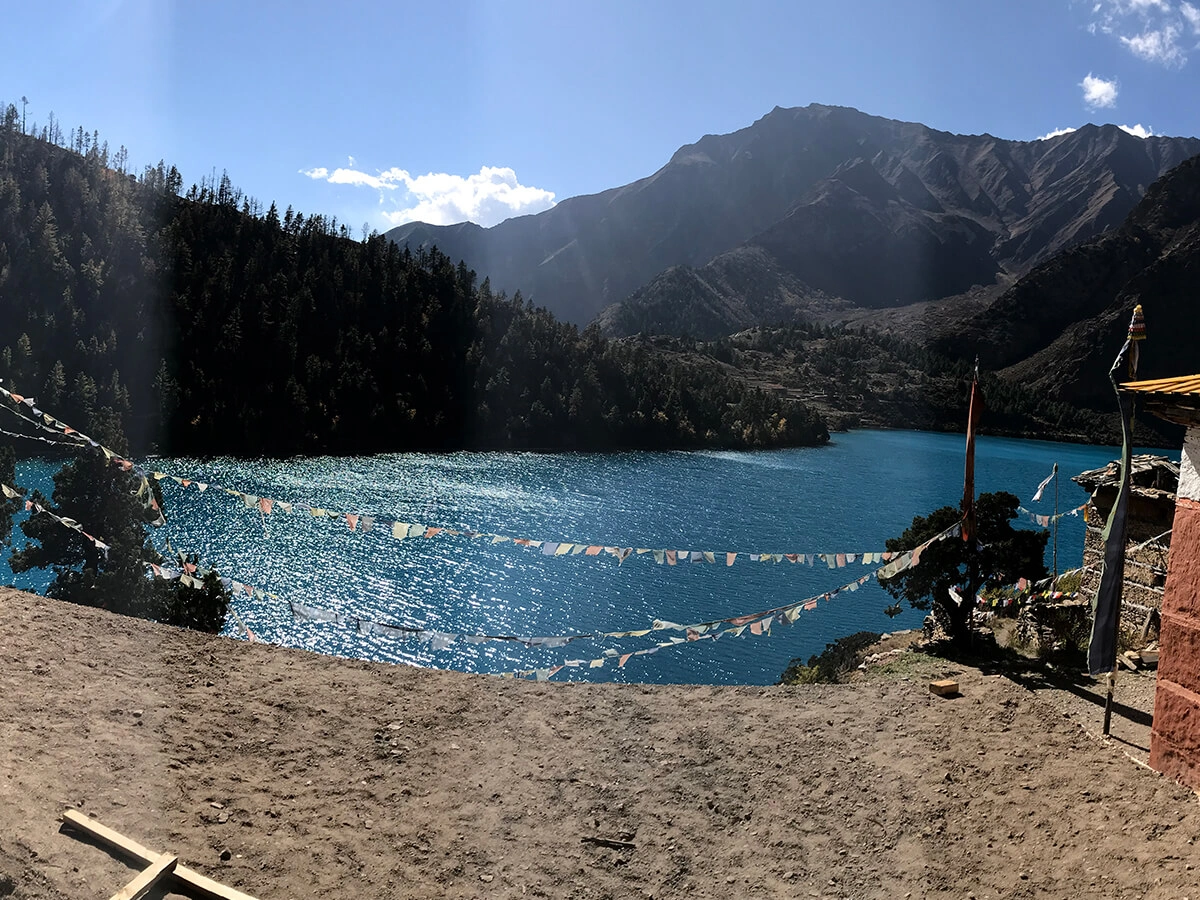
Also called Dolpa, Dolpo is one of the farthest trekking destinations in Nepal from its capital city, Kathmandu. Location-wise, it is situated in the northwestern part of Karnali province and is within Nepal’s largest national park, called the Shey Phoksundo National Park, which is further named after the deepest alpine lake of the nation, Phoksundo Lake (3,611 m/11,847 ft), measuring about 145 m/476 ft in depth.
Jupal is the typical trek starting point, be it the Short Dolpo Trek, the mid-duration Upper Dolpo Trek, or the lengthier Inner Dolpo Trek, and is almost 569 km away via road or about 282.9 km via two flights, first from Kathmandu to Nepalgunj and then only to Jupal. This distance, restricted area designation, isolation, and remoteness make it one of the best hidden gems of Nepal, a haven for daredevils who enjoy challenges with rewards.
The unique Tibetan Buddhist and Bon culture
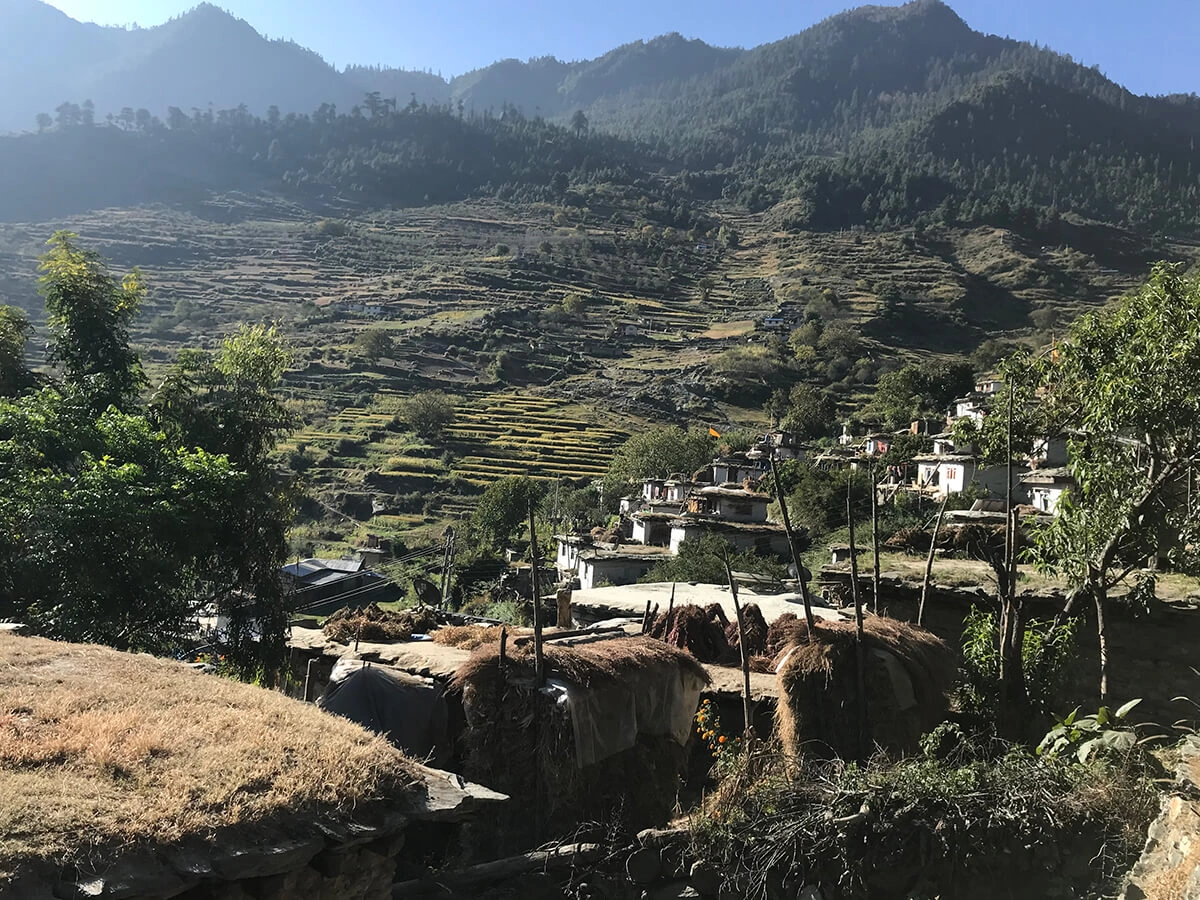
The Inner Dolpo Trekking journey also includes walking past several traditional Nepalese villages, which in this Dolpo region are home to people with strong cultural and spiritual ties to Tibetan Buddhism, specifically the Nyingma and Kagyu sects, in addition to the Bon Po culture, one of the most ancient ones still well preserved in the Upper Himalayas, including Dolpo, behind sky-towering mountain giants.
The numerous gompas, monasteries, mani walls, and prayer wheels, often adorned with vibrant prayer flags, are the representation of it, and so is the friendly nature of locals who, despite leading a life that could be opposite of what you are used to, welcome you wholeheartedly. Yet to catch the sights of massive tourism away from modern chaos, these make the Inner Dolpo Trip more than about mountains and hills—a journey of self-discovery.
The sacred Phoksundo Lake and Shey Gompa
No wonder Phoksundo Lake is the main highlight of the Dolpo region. A natural amphitheater with crystal clear, deep blue water reflecting the surrounding snow-capped mountain giants and, till now, not holding any records of aquatic life, the serenity here is at its peak, and a sense of adventure and achievement just flows like blood. The deepest lake in Nepal, both Hindus and Buddhists visit the lake as a sacred pilgrimage site in the hope of blessings.
Where, unlike in other lakes, bathing is not allowed. As per Shey Gompa, though it is cherished as a Buddhist religious site, its location at a high altitude with 360-degree full views of the scenery and its distance from human habitat make it the right place to admire the Tibetan architecture and engage in meditation, self-reflection, and mindfulness. On this Inner Dolpo Trek of 25 days, you can visit both in a single trip.
Conquer the ultimate off-the-beaten adventure in Nepal
According to the 25 days for Inner Dolpo Trekking Itinerary, the official foot walking begins on the third day from Jupal and enters the highly restricted area through Sulighat, Chhepka, Jharana Hotel, and finally to Ringmo Gaon and Phoksundo Lake on the 6th day. An acclimatization day begins the second phase of the journey that takes you past Phoksundo Khola Camp, Pass Camp, and Shey Gompa, with an extra day here for acclimatization.
Thereafter, trekkers on the Inner Dolpo Trek route head to Namgung, Saldang, Sibu, Pass Camp, Tokyu, Dho Tarap, Toltol, Tarakot, Dunai, and back to Juphal to catch a flight to Kathmandu. With a contingency day, it is taken as one of the best Dolpo trekking routes that crosses several high mountain passes, including for the years 2026 and 2027. Contact us now for a more sorted experience of hiking Nepal’s least trodden trekking route.