Introduction
Namaste everyone, I am a local Sherpa trekking guide based in Kathmandu Nepal. I have walked the Annapurna Base Camp trail more times than I can count, you would think it gets boring, same route, same stones, same switchback but I will let you in on a secret. It never does, in fact, every sunrise at the top of ABC at 4130m still hits me like a punch in the chest, the reaction from every client reminds me why I chose this very job.
Something magical keeps drawing travelers back to the Annapurna region, year after year. You just need to go out on the trails to figure out what spells the mountains cast upon you. Today I'm pulling back the curtain. No corporate brochures, no polished marketing fluff, only raw, honest guidance from someone who knows the Himalayas well. If you're looking into planning the ABC trek, grab a cup of lemon ginger honey, get comfortable because I am about to take you to this very trail that never fails to mesmerize. ABC – Annapurna Base Camp – affectionately known, earning its reputation as one of Nepal's most beloved treks, captivating both international tourists and local adventurers alike.
Why ABC Over Everest? (My Honest Take)
People often ask me: "Is Annapurna Base Camp really worth it, or should I just save up for Everest Base Camp?"
Here's my answer: Everest Base Camp is iconic, sure. But it's longer, more expensive, and honestly more crowded. ABC gives you that same jaw-dropping, 360-degree amphitheater of 8,000m giants – Annapurna I, Machhapuchhare, Hiunchuli, Gangapurna – in just five days. You don't have to be a mountaineer. You don't have to be in Olympic shape. You just need a little grit, a decent pair of boots, and the willingness to be humbled by nature.
And the best part? You go from subtropical bamboo forests to a frozen white sanctuary in a matter of days. It's like watching nature fast-forward through four seasons in one incredible week.
Related: [Everest Base Camp vs Annapurna Base Camp – Which Trek is Right for You?]
A Trek for Everyone
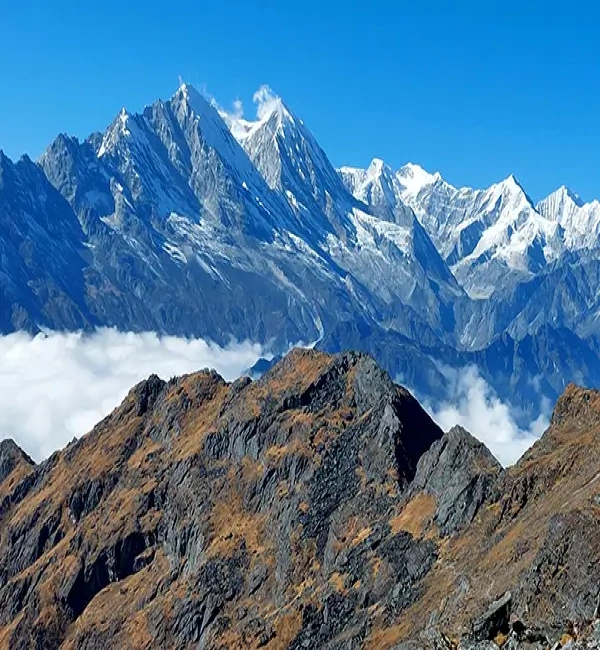
Rated as moderate in difficulty, this trek is considered one of the safest routes within the Annapurna region. What makes it truly special is the 360‑degree view of the Himalayas, a panoramic spectacle that feels almost transcendent. Imagine standing in a paradise where mountains surround you on all four sides, their snow‑capped peaks piercing the brilliant blue sky. That is what you get to experience with this trail.
One of the trek's greatest assets is its well‑developed infrastructure. With more than 10 locations offering hotels and lodges along the trail, you're never too far from a place to rest. Even if exhaustion catches up with you, there's always a warm lodge waiting just around the corner.
Best Time for ABC Trek
One of the most common questions I get is about timing. Here's my honest breakdown based on years of guiding:
| Season |
Months |
What to Expect |
Recommendation |
| Autumn (Peak) |
October-November |
Crystal-clear skies, stable weather, perfect mountain views |
⭐ Highly Recommended |
| Spring |
March-April |
Rhododendrons in full bloom, mild temperatures, occasional rain |
⭐ Recommended |
| Winter |
December-February |
Cold, snow at higher elevations, fewer crowds, empty trails |
For the brave |
| Monsoon |
June-September |
Rain, leeches, limited visibility, landslides |
Not recommended |
My personal recommendation? October. The skies are impossibly blue, the temperatures are comfortable, and the mountains put on a show you won't forget.
What to Pack for ABC Trek
From years of guiding, here's what I've seen trekkers need most:
Clothing:
-
Thermal base layers (top and bottom) – essential for cold mornings
-
Fleece jacket or pullover – mid-layer warmth
-
Down jacket – absolutely essential for ABC mornings
-
Waterproof shell jacket – weather changes fast
-
Trekking pants (2 pairs) – one for walking, one for lodge
-
Warm hat, gloves, scarf – don't skimp on these
-
Wool socks (3-4 pairs) – cotton is useless at altitude
Footwear:
Gear:
-
Headlamp with extra batteries – power outages happen
-
Trekking poles – saves your knees on the descent
-
Power bank (20,000mAh minimum) – charging is limited
-
Water purification tablets or filter
-
Sleeping bag liner (if you're particular)
Essentials (Never Forget These):
-
Sunscreen SPF 50+ – the sun at altitude is brutal
-
Lip balm with SPF – cracked lips will make you miserable
-
Sunglasses with UV protection
-
First-aid kit (blister plasters, paracetamol, diarrhea meds)
-
Snacks (energy bars, nuts, chocolate)
-
Quick-dry towel
Documents:
-
Passport (and a photocopy)
-
ACAP Permit (Annapurna Conservation Area Project)
-
TIMS Card (Trekkers' Information Management System)
-
Travel insurance (covering helicopter rescue!)
ABC Trek Permits
You'll need two permits for the ABC trek:
| Permit |
Cost (NPR) |
Cost (USD) |
Where to Get |
| ACAP Permit |
3,000 |
~$23 |
Kathmandu or Pokhara |
| TIMS Card |
1,000 |
~$8 |
Kathmandu or Pokhara |
Important: Carry your permits at all times. There are checkpoints along the trail where officials will ask to see them.
Planning Your Timeline
Most trekkers complete this journey within 5 to 6 days, starting from the lakeside city of Pokhara. Here's how our adventure unfolded.
Day 1: Pokhara → Jhinu → Chhomrong
Our journey began with a shared jeep from Harichowk, which took us all the way to Jhinu, the last point accessible by road. From here, it's just you and your legs.
The hike to Chhomrong is a relentless uphill battle – over 1,500 stone-paved steps zigzagging up the hillside. Your calves will burn. Your lungs will protest. But every time you stop to catch your breath and look back, the valley opens up like a green carpet leading to the snow-capped horizon.
Starting early in the morning, we reached Chhomrong around 11 AM to noon. This charming village is one of the main destinations on the route, and we found a cosy spot to rest and refuel.
Continuing from Chhomrong, we made our way to Sinuwa, divided into Lower and Upper:
-
Lower Sinuwa: ~2 hours
-
Upper Sinuwa: ~3 hours
Some ambitious trekkers decide to push all the way to Bamboo on day one, but we chose to rest at Upper Sinuwa, a decision we did not regret. The scenery there was breathtaking, with sweeping views that made every drop of sweat worthwhile.
Insider tip: The sunset views of Annapurna South from Upper Sinuwa are absolutely criminal, they should be illegal.
Day 2: Upper Sinuwa → Bamboo → Deurali
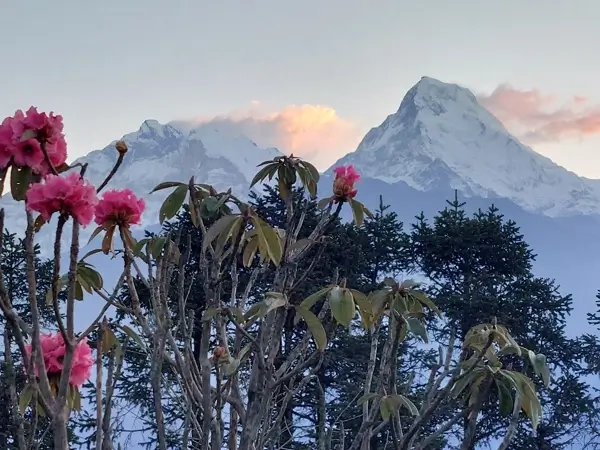
After a hearty breakfast of banana pancakes and Tibetan bread, we dropped down into a different world. We set off toward Bamboo, beginning with an uphill climb through lush bamboo and rhododendron forests with trees blocking out the sky. During spring, the rhododendrons burst into vivid red and pink bloom. We paused there to catch our breath and soak in the serenity, a tiny settlement clinging to the mountainside.
Our next stop was Upper Dovan, roughly 45 minutes from Bamboo. From there, we continued for about 2–3 hours until we reached the village of Himalaya. The trail remained mostly uphill, but the surrounding beauty – rustling leaves, distant avalanche rumbles, crisp mountain air – compensated for every strain.
We pushed further to Deurali (3230m) , where we called it a day. The local lodge offered warm hospitality and stunning views that made the effort feel entirely justified.
Standing right in front of us that night was Machhapuchhare, the iconic "Fishtail" peak at 6,993 metres. It's sacred to the locals and is the only peak in Nepal that has never been summited (and never will be, by official decree). She's fierce, she's beautiful, and she remains pristine territory. Respect the gods.
Did you know? Machhapuchhare is the only unclimbed peak in Nepal over 6,000 metres, protected by government decree since 1957.
Day 3: Deurali → MBC → ABC (The Grand Finale)
The third day was the crown jewel of our journey.
Leaving Deurali, we hiked along a wide glacier river bed. We first ascended to MBC (Machhapuchhare Base Camp) at 3700m. Standing at the foot of the sacred "Fishtail" mountain, we spent time capturing photos that would never truly do justice to the real experience.
Then came the final push – two more hours. This stretch follows an ancient glacier moraine. If there's snow on the ground (and there usually is, even in October), the whole landscape transforms into a white-silver dreamscape.
The final 2 hours of hiking brought us to our ultimate destination: Annapurna Base Camp (ABC) at 4,130 metres. Surrounded by giant peaks, we felt like we were standing on top of the world. The silence broken by the howling rush of wind.
With snow blanketing the ground, the scenery became even more magical, pure white against the deep blue sky, with mountains rising on every side. We spent the rest of the day resting, clicking countless pictures, and simply enjoying the view from the lap of the Himalayas.
We spent the afternoon resting, clicking a million photos, and eagerly waiting for the main event.
Day 4: ABC → MBC → Deurali → Himalaya → Dovan → Sinuwa
I woke my crew at 5:15am, freezing. Fingers going numb instantly. But we dragged ourselves outside, wrapped in every layer we own, and faced east. Because this was something I had to make everyone see.
And then... it happens.
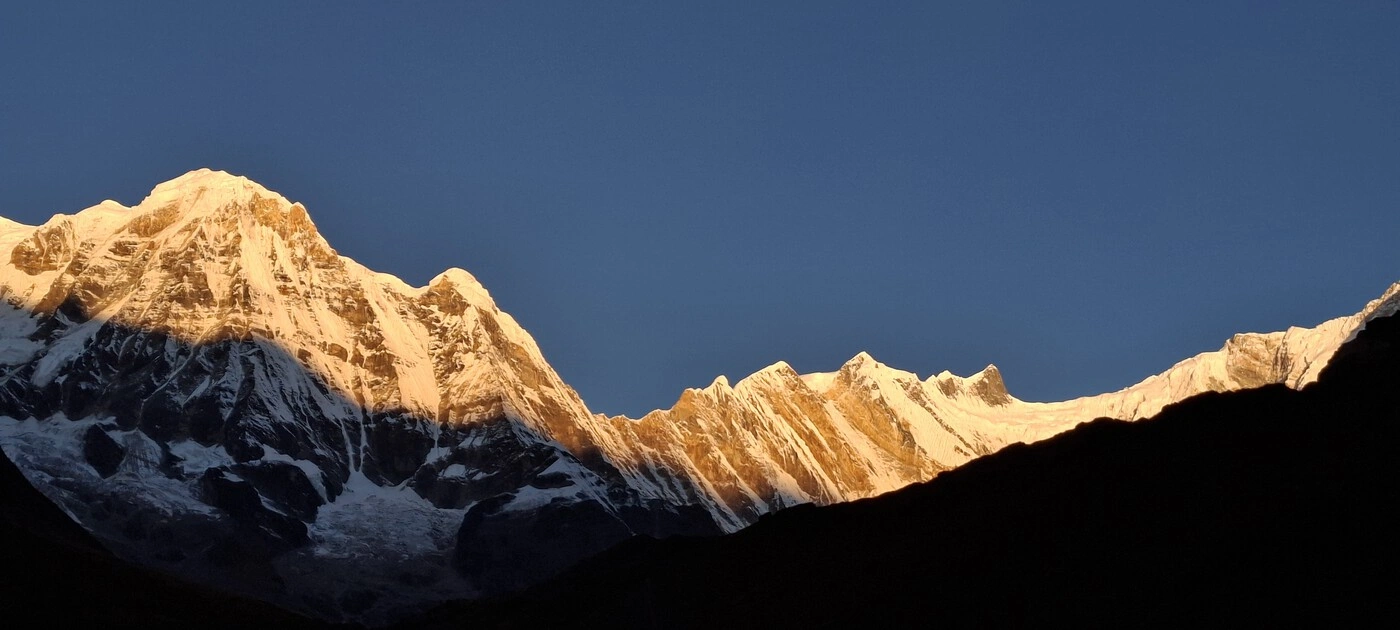
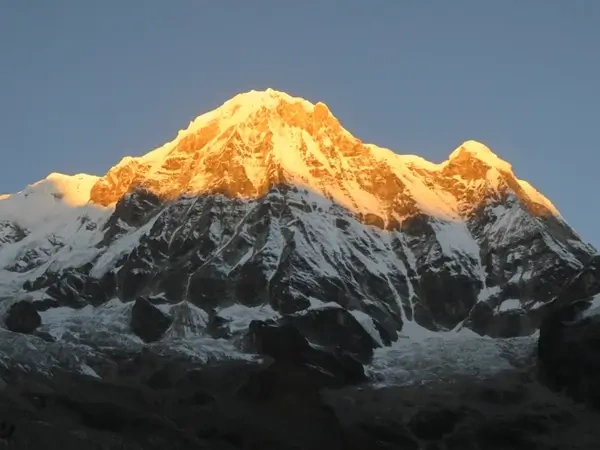
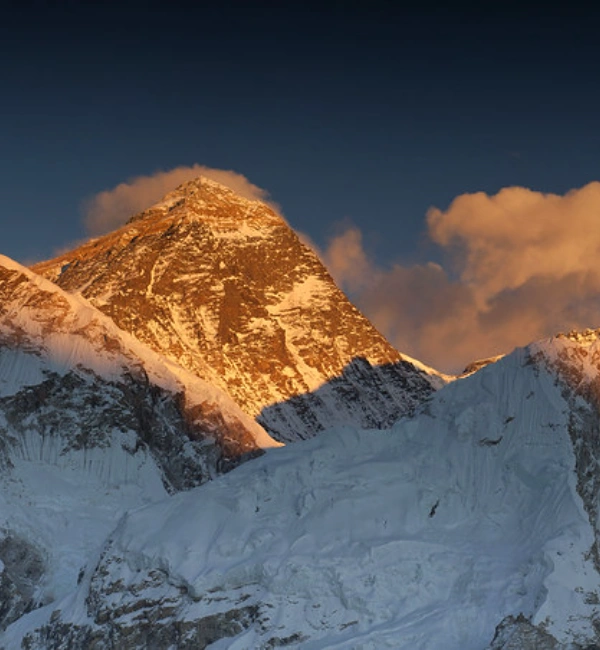
If the weather favours you, you'll witness one of life's most spectacular scenes – the first rays of the sun kissing the mountain peaks, painting them in hues of gold and pink. If the weather clears, it's a moment that stays with you forever.
After breakfast, we began our descent, retracing our steps:
ABC → MBC → Deurali → Himalaya → Upper Dovan → Sinuwa
We arrived at Sinuwa after 6-7 hours of downhill hiking by late afternoon and decided to rest here for the night. As a feast, we had the ultimate Himalayan Daal Bhat – lentil soup, rice, vegetables, pickles. And here's the best part: it's unlimited. The lodges are comfortable, and the familiar surroundings give you a chance to reflect on the incredible journey so far.
Day 5: Sinuwa → Chhomrong → Jhinu → Pokhara
Our final day started with a gentle walk from Sinuwa back to Chhomrong. We enjoyed a well‑deserved meal there, took a short rest, then crossed the iconic suspension bridge to reach the jeep pickup point at Jhinu.
From there, a shared jeep carried us back to Pokhara, tired but utterly fulfilled.
ABC Trek Add-On Options
If you have extra time and an appetite for more adventure, the Annapurna region offers several exciting add-ons:
Add-On 1: Poon Hill Circuit
Duration: +3 to 4 days | Difficulty: Easy to Moderate
This is one of Nepal's most popular short treks for good reason. Poon Hill gives you what many consider the most famous sunrise view in the country – a panoramic spectacle of Dhaulagiri, Annapurna South, and Machhapuchhare all lined up before you at 3,210 metres.
The trail winds through rhododendron forests that burst into stunning red and pink blooms during spring. You also get to experience authentic Gurung villages along the way, with warm hospitality.
I usually recommend this as a warm-up before ABC. It's a great way to acclimatize and ease into the mountains before tackling the higher elevations.
Add-On 2: Gosaikunda Route
Duration: +5 to 7 days | Difficulty: Moderate to Challenging
For those with extra time and a taste for remote adventure, continuing from Annapurna toward the Gosaikunda route is a rewarding option. This path takes you to sacred high-altitude lakes at 4,380 metres, which are an important pilgrimage site for Hindus.
You'll experience less-traveled trails, remote villages, and stunning views of the Langtang and Ganesh Himal ranges. It's a deeper immersion into the wild beauty of Nepal.
The best time for this detour is October to November or April to May. You'll need a separate permit and proper acclimatization.
Add-On 3: Annapurna Circuit Extension
Duration: +2 to 3 days | Difficulty: Moderate
Instead of retracing your steps from ABC, you can take the longer way out through the Annapurna Circuit. It's a different route that offers a fresh perspective on the sanctuary.
The trail sees fewer crowds, gives you extra days in the mountains, and lets you see the Annapurna range from a different angle.
Add-On 4: Chitwan National Park Safari
Duration: +2 to 3 days | Difficulty: None (leisure)
After the mountains, head south for a completely different experience. Chitwan National Park is just a few hours from Pokhara and offers jungle safaris, one-horned rhinoceros sightings, and if you're lucky, Royal Bengal tigers.
You can take canoe rides on the Rapti River, explore the jungle on elephant back or in a jeep, and experience Tharu cultural shows in the evenings.
The best time for wildlife viewing is October to March.
Add-On 5: Pokhara Relaxation
Duration: +2 days | Difficulty: None
This is what I tell everyone – don't rush back. Pokhara is a destination in itself.
The lakeside city offers paragliding over Phewa Lake, boating on the lake, and visits to the Peace Pagoda, Gupteshwor Cave, and Devi's Fall. The lakeside cafes serve incredible food, and there are plenty of spas for a well-deserved massage.
If you book a lakeside room with a mountain view, you'll wake up to the reflection of Machhapuchhare in the water – pure magic.
Itinerary Options at a Glance
| Option |
Total Duration |
Best For |
| ABC Only |
5-6 days |
Those short on time who want the full experience |
| ABC + Poon Hill |
8-10 days |
Acclimatization and classic sunrise views |
| ABC + Gosaikunda |
10-12 days |
Adventurers seeking remote trails |
| ABC + Chitwan |
8-9 days |
Wildlife lovers wanting mountains and jungle |
| ABC + Pokhara Relax |
7-8 days |
Those needing recovery time after the trek |
| ABC + All Add-Ons |
14-16 days |
The ultimate Nepal adventure |
My Golden Rules for ABC Trekkers (From a Guide's Heart)
Final Tips for Fellow Trekkers:
-
Pack light but bring layers – temperatures vary dramatically from 25°C to -5°C.
-
Start early each day – morning skies are clear, afternoon clouds steal your views.
-
Book lodges in advance during peak seasons – October and November are packed.
-
Stay hydrated and take it slow – altitude is no joke. Drink 3-4 litres daily.
-
Don't forget your camera – you'll want to capture every sunrise and snowy peak.
-
Invest in a quality power bank – 20,000mAh minimum.
-
Never forget your sunscreen or your lip balm – the sun at altitude is brutal.
-
Get travel insurance – must cover helicopter rescue and trekking up to 5,000m.
ABC Trek FAQs
Is the ABC trek safe for solo travelers?
Yes. The trail is well-marked and well-traveled. Most solo trekkers end up joining groups along the way. I'd still recommend a guide for first-timers.
Do I need a guide for ABC trek?
Not mandatory, but highly recommended. The trail has junctions and weather can change quickly. A guide adds safety, cultural insights, and local connections.
What permits do I need for ABC trek?
You need an ACAP permit (Annapurna Conservation Area Project) and a TIMS card (Trekkers' Information Management System). Get them in Kathmandu or Pokhara.
How fit do I need to be for ABC?
Moderate fitness is fine. If you can walk 5-6 hours comfortably with some elevation, you're good. Practicing stairs before you come is a great idea.
What about altitude sickness on ABC?
ABC is at 4,130m – altitude sickness is possible. Follow the golden rule: walk high, sleep low. Ascend slowly. Drink water. If you feel unwell, descend immediately.
Can I do ABC trek in winter?
Yes, but it's cold. Snow at higher elevations, freezing nights, but beautiful empty trails. December-February is for the brave.
Is there mobile signal on ABC trek?
Mobile signal is available at most villages, though spotty at higher elevations. ABC has limited connectivity – enjoy the digital detox.
Final Thoughts
The ABC trek delivers more than just mountain views. Somewhere between the burning lungs, the freezing dawn, the golden sunrise, and the quiet hum of the wind, you will find a piece of yourself that the city drowned out – something intangible. A connection to nature. A challenge that pushes your limits. An experience that stays with you long after you've returned home.
Whether you're a seasoned trekker or a first‑timer, this trail welcomes you with open arms and rewards you with memories that last a lifetime.
Ready to plan your Annapurna Base Camp trek? [Contact me for guided treks].
Happy trekking!